
Present lab members and supervised students:
 Ana María Cabello, PhD, is a marine microbial ecologist who specialized during her thesis at the ICM-CSIC in the study of the diversity, abundance and distribution of picoplanktonic algae groups. Subsequently she worked at AZTI and at UCSC (University of California Santa Cruz) and her line of research opened to the study of cyanobacteria to evaluate their activity (gene expression) both in laboratory manipulation experiments and in environmental samples. She is currently a research associate at IEO Málaga where she applies omics and other molecular techniques to the study of marine plankton, especially those size fractions that cannot be identified and quantified with classical techniques (pico-phytoplankton and bacterioplankton).
 Guillermo Domínguez-Huerta, PhD, is a virologist and specialist in environmental viruses. He began his scientific career studying the evolution of quasispecies of begomoviruses causing the tomato yellow leaf curl disease at the Institute of Subtropical and Mediterranean Horticulture “La Mayora” (joint institute between CSIC and the University of Malaga). Subsequently, he joined Matthew Sullivan’s research group at Ohio State University, where he studied marine and soil RNA virus ecology using data from the Tara Oceans and Stordalen Mire. Guillermo is interested in understanding how viruses impact natural ecosystems and biogeochemical cycles. He is currently a postdoctoral researcher at IEO Málaga and studies the ecology of virioplankton communities in the Alboran Sea and the Mar Menor using bioinformatics methods.

Jorge J. Santos-Bruña started his research career with the study of mesoscale convective phenomena (DANA) through meteorological modeling at the University of Alicante. During his collaboration grant he was developing an IoT architecture for the physicochemical monitoring of coral crops. During his MSc in oceanography, he showed interest in the study of plankton and its relationships with biogeochemical cycles, collaborating in projects on the development of ocean-based carbon sequestration (CDR) technologies. He joined our team through the JAE Intro grant, and studied the diversity and distribution of photoheterotrophic bacteria in the Alboran Sea. He stayed in our group to conduct his PhD thesis on marine viruses.
 Silke Martínez Moreno is a biologist specialising in the study of holobionts. She is conducting her thesis at the University of Granada on echinoderm holobionts and their ecosystem functions in coastal areas, supervised by Dr. Isabel Reche and by myself. She conducts studies of the microbial communities of holobionts looking for phylogenetic and/or environmental patterns. She also studies the possible functionalities of holobionts related to the nitrogen cycle using PCR and ddPCR techniques.
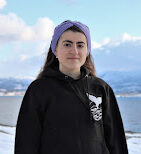 Isabel Martínez Monreal is a marine biologist with a Master’s degree in Marine Ecology from Nord University (Norway) and strong international research experience. She is currently pursuing her PhD within the COUPLING II project, where she investigates biotic interactions between bacteria and protists in the Southern Ocean, and how small‑scale physical processes in the water column shape and modulate these interactions. She has participated in multiple oceanographic campaigns and has presented her research at international conferences. Her main interests include marine biodiversity monitoring and understanding the impacts of climate change on marine ecosystems.
Former supervised researchers and students
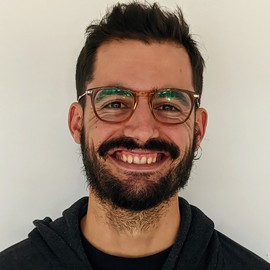
Adrià Auladell, PhD, is currently a postdoc at the Institut de Biologia Evolutiva (IBE-UPF-CSIC) in Barcelona. He is interested in the ecology of marine microbes, in bioinformatics and biostatistics. He conducted his PhD at Institut de Ciències Marines (ICM-CSIC, Barcelona) supervised by myself and by Pep Gasol. His thesis focused in understanding the ecology of microbial communities on a temporal basis through studying their seasonal patterns in the Blanes Bay Microbial Observatory, using 16S rRNA gene amplicons and metagenomic datasets. He cares deeply about open access science and the need of code literacy in the scientific world in general. When he is not science-doing, he is either worrying about climate change or climbing mountains.
 Carlota Ruiz Gazulla is a biotechnologist specialized in microbial ecology. In her thesis, she studied the ecological patterns of photoheterotrophic bacteria in the global ocean. She used molecular biology and bioinformatics techniques, epifluorescence microscopy and high performance liquid chromatography (HPLC). She finished her PhD in 2024, and spent some time afterwards hired in the framework of the NITROMAR project, to study the biogeochemical cycle of nitrogen in phytoplankton blooms in the Mar Menor, using quantitative PCR (qPCR), as well as the microbial communities involved in this process. She is now a postdoctoral researcher at the Observatoire Océanologique de Banyuls, in France.
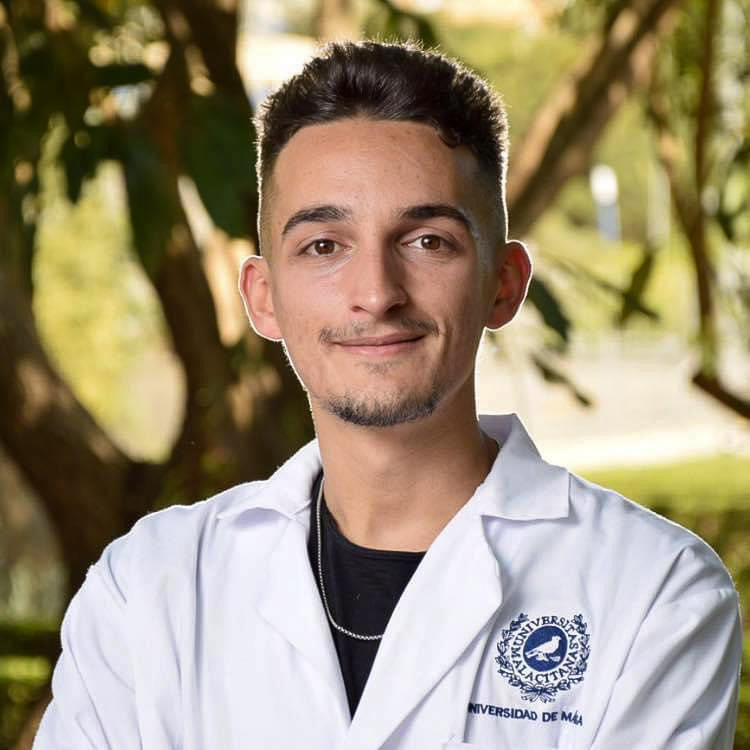 Iván Toro Pineda completed his final year of the Biology Degree at the University of Málaga while holding a JAE Intro ICU fellowship at the Centro Oceanográfico de Málaga. There, he carried out his undergraduate thesis, focused on identifying CRISPR‑Cas sequences in metagenomic datasets from the Mar Menor. His scientific curiosity has driven him to collaborate on several research projects as an intern in the fields of ecology and genetics at the University of Málaga. He also served as co‑leader of the University of Málaga team participating in iGEM, the world’s largest international competition in Synthetic Biology, organized by the Massachusetts Institute of Technology (MIT). The team earned a bronze medal for their work. He is currently enrolled in the Erasmus Mundus Joint Master Programme in Marine Biotechnology.
 Elizabeth León Palmero, PhD, is a microbial ecologist and biogeochemist specialist in N2O and CH4 cycling. She started her scientific career studying the production and emission of greenhouse gases in freshwater reservoirs at the University of Granada. Her PhD thesis was awarded by The Iberian Association of Limnology (AIL) and later by the European Federation for Freshwater Sciences. Afterwards, she joined the Nordcee group at the University of Southern Denmark to investigate the production and consumption of N2O in the Baltic Sea and in the Greenland Sea. She was a Marie Skłodowska-Curie fellow in our group. She is now an Associate Research in Bess B. Ward Lab at Princeton University, focusing on the oceanic oxygen minimum zones. Elizabeth’s main interest is to characterize the biotic and abiotic processes that lead to the production of N2O in aquatic environments by applying biogeochemical and metagenomic analysis.
Former supervised MSc students:
Lidia Hernández Herraiz. Masters in Oceanography and Global. University of Las Palmas de Gran Canaria. TFM: Caracterización del microbioma en un ecosistema altamente antropizado: la laguna del Mar Menor. 25/07/2024. Co-supervised with Carlota R. Gazulla, IEO-CSIC.
Rocio Blanca Sújar. Masters in Conservation, Management and Restoration of Biodiversity. University of Granada. TFM: El biofilm asociado al holobionte Holothuria tubulosa. 23/09/2022. Co-supervised with Isabel Reche, UGR
Silke Martínez Moreno. Masters in Conservation, Management and Restoration of Biodiversity. University of Granada. TFM: Microbioma del mucus y subcutícula en el holobionte Holothuria tubulosa: evidencias de desnitrificación. 20/07/2021. Co-supervised with Isabel Reche, UGR.
Daniel Baños Picazo. Masters in Molecular Biotechnology, University of Barcelona. TFM: Growth rates and diversity of aerobic anoxygenic phototrophic bacteria in the Mediterranean Sea. 12/09/2018. Co-supervised with Olga Sánchez, UAB.
David Funosas Planas. Masters in Bioinformatics, Pompeu Fabra University. TFM: Study on the potential use of planktonic communities as bioindicators in the NW Mediterranean Coast. 04/07/2018.
Sergio Estruch Miñana. Masters in Advanced Microbiology, University of Barcelona. TFM: Marine planktonic protist diversity in the Palma Bay (Mallorca) as revealed by Illumina Sequencing. 13/09/2017. Co-supervised with Albert Reñé, ICM-CSIC.
Daniel Romano Gude. Masters in Advanced Microbiology, University of Barcelona. TFM: Microbiological study of an underwater volcano in a degassing stage: island of El Hierro. 12/09/2017
Adrià Auladell Martin. Masters in Bioinformatics, Pompeu Fabra University. TFM: Interannual seasonal dynamics of aerobic anoxygenic photoheterotrophs in the NW Mediterranean. 03/07/2017. Co-supervised with Pablo Sánchez, ICM-CSIC.
Marta Royo Llonch. Masters in Advanced Microbiology, University of Barcelona. TFM: Microdiversity within Single Cell Genomics of marine Bacteroidetes: Kordia spp. as model microorganisms. 09/09/2013. Co-supervised by Silvia G. Acinas, ICM-CSI